Showing posts with label dog treats. Show all posts

Tuesday, November 08, 2011

A Good Treat Idea

0 comments
Pet Care Tip

Reserve a percentage of your dog's daily food allowance to use for treats. This insures that your dog stays within his recommended calorie intake, while still making him feel rewarded for good behavior.

Food rewards don't have to be big -- a little goes a long way.

###

For a premium quality dog food go to Life's Abundance Dog Food  Lifes Abundance Dog Food does not contain corn, wheat, artificial flavors or colors, by products or added chemical preservatives.

***
  • Digg
  • Del.icio.us
  • StumbleUpon
  • Reddit
  • RSS

Wednesday, October 12, 2011

Portly Pets

0 comments
Portly Pets a Problem for Many Owners
Daily Inter Lake, Saturday, September 17, 2011

It's not just two legged animals that are having a problem with obesity.  According to recent reports, pets are heavier than ever.

A 2009 national survey of veterinarians by the Association for the Prevention of Pet Obesity found 45 percent of dogs and 58 percent of cats were overweight or obese.

Inactivity, too many snacks and poor diets are to blame for both pet and human obesity issues.  The health implication can be severe for everyone involved.

Overweight animals can have high blood pressure, high cholesterol, be at risk for heart attack or stroke, be at risk for skeletal problems, such as hip dysplasia, and low self-esteem, among other things.

The good news is some the same methods humans use to lose weight could be effective for pets, too.
  1. Choose foods that list meat (protein) first.  Too many pet foods have replaced the majority of protein with high-carbohydrate ingredients such as corn and wheat.
  2. Watch portion sizes.  Use the portion suggestions on the food as a guideline for feeding a pet.
  3. Consider smaller, more frequent meals.  Instead of one large meal, feed a dog or cat three small meals a day.
  4. Cut out nutritionally poor treats.  Replace fatty dog bones with crunch carrots or broccoli for better health.
  5. Get moving.  Walking a pet is good for everyone involved.  Aim for 30 to 60 minutes of activity a day.  This will also improve joint flexibility.
Pets don't raid the refrigerator at night and often rely on their owners for exercise and care.  Poor habits on the part of pet owners could spell trouble for pets in terms of weight gain.

###

Information about Lifes Abundance Weight Loss Dog Food
Information about Lifes Abundance Healthy Dog Treats
For Human Weight Loss visit the ShapeWay Diet Plan

***
  • Digg
  • Del.icio.us
  • StumbleUpon
  • Reddit
  • RSS

Sunday, September 11, 2011

Canine Grooming Tips

0 comments
Canine Grooming Tips by Dr. Jane
Lifes Abundance Blog Wednesday, 24 August 2011 09:37 by Dr. Jane

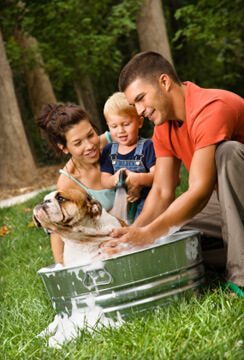
Family Washing Dog Using
Lifes Abundance Grooming Products
No one likes a bad hair day … and that includes your dog. Just like with humans, the skin is the largest organ of a dog’s body. Every day, their skin and coats are exposed to UV rays, pollution, infectious agents, drying heat or wind.

Because it can contribute to a dog’s overall health, grooming should be an essential part of companion animal care. However, despite your best intentions, it’s not unusual for grooming habits to hit a glitch. Or two. Or three! While bathing a dog, I think all of us have experienced getting wetter than your dog, being interrupted by phone calls, or, worst of all, a sudsy canine tearing off, leaving a wet, sudsy trail behind him. As a veterinarian with a good deal of grooming experience, I can tell you that planning ahead can reduce unwanted problems and stress, so here are a handful of my best tips.


BEFORE THE GROOMING SESSION

Unfortunately, bathing can be stressful for some dogs, as some just tolerate it better than others. For those pups who are particularly skiddish, consider brewing some chamomile tea to calm your dog. Thirty minutes before you bathe, give your dog a cooled cup of chamomile tea with honey, followed by a dog treat that’s rich in carbohydrates, like our Antioxidant Health Bars. The carbohydrates will help deliver the calming tea straight to your dog’s brain. Better yet, you can both sit down with some tea and play soothing music, to set a calming tone for your upcoming grooming session. You can also give your dog tea during the grooming session. As we’ve already mentioned, just make sure the tea has cooled off (no hotter than room temperature). 

I recommend the use of a grooming apron with pockets that covers you from chest to mid-thighs, to protect your clothes. While you can always put your clothes in the laundry later, dog hair can be difficult to remove from a washing machine. A full apron not only protects your clothes, in the pockets you can keep treats, shampoo, conditioner and a brush. The treats you choose must smell appealing to your dog - like our Tasty Rewards Training Treats - and keeping them in your apron pockets will leave your hands free for grooming.

If your dog is of a long-haired breed, brush with a fine-tooth comb prior to bathing, so you don’t have to contend with knots while shampooing, potentially making a bad problem worse.

DURING THE GROOMING SESSION

Whether you bathe your dog in the tub or the backyard, sit on a low stool to prevent stress or injury to your back and knees. If you’re outside, I advise that you use a six-foot leash. Tie it around your waist or hook it on your belt to free up your hands and prevent your dog from slipping away for a sudsy romp.

If you’re using water from an outdoor hose, keep in mind that, while it might be warm outside, the water will feel cold to your dog, not always without substantial discomfort. If at all possible, use tepid water, either by running extension hoses from the sink in your house, or simply bathe your dog indoors in a tub.

When you apply the shampoo, make small circles with a hairbrush with plastic nubs to distribute the shampoo evenly through the hair and onto the skin. This will also exfoliate the skin and allow the herbs in the shampoo to penetrate the skin. Leave the shampoo on for about three minutes, but don’t allow it to dry as this can irritate the skin. Our Revitalizing Shampoo suds well, rinses easily, and features rosemary to help increase blood flow, ultimately contributing to healthier skin and hair.

Most animals really don’t enjoy having their heads washed, so I suggest that you simply wet the head using a wash cloth. That way, you’ll be sure to prevent shampoo from entering the eyes or ears, making the entire experience more enjoyable for your canine companion.

AFTER THE GROOMING SESSION

I recommend towel drying your dog versus using a blowdryer, which can excessively dry or even burn skin, and frighten some dogs with the sound generated by this device. The best method for towel drying is by patting rather than using a circular motion, which can often lead to matting.

In most cases, you’ll be able to see an immediate change in your dog’s appearance following a bath. You’ll know that you’re using a high quality shampoo when your dog has a shinier, fuller coat, less dander and no more “doggie smell”. With moisture-activated odor neutralizers, our Revitalizing Shampoo features antioxidants and organic extracts of rosemary and sage, nutritive herbs that penetrate into the hair shaft and promote coat health. Also included are kiwi and mango essences, selected because they too enhance the health of the skin, as well as leaving your dog’s coat smelling clean and fresh.

You should not bathe your dog more often than every two-to-three weeks. If your dog’s coat could do with some freshening in between baths, use Bath Fresh Mist to neutralize odors and condition the skin and coat. This product is so simple to use … just spray and brush into in the coat. You will love the aroma and your dog will love the attention!

And what about you? Do you have any “must-know” grooming tips that you’d like to share with your fellow blog readers? Be sure to leave your thoughts in the comments section below.

Thank you for all you do to make the world a better place for companion animals!

Dr Jane Bicks   Dr. Jane Bicks

###

Today's post suggested by Lifes Abundance Dog Food

***
  • Digg
  • Del.icio.us
  • StumbleUpon
  • Reddit
  • RSS

Saturday, January 22, 2011

Six Ways to Whittle Down Your Dog's Waistline

0 comments
Six Ways To Whittle Your Pets Waistline
by Dr. Jane Bicks, Lifes Abundance, January 20, 2011

According to a 2009 study published by the Association for Pet Obesity Prevention, 34 million dogs and 54 million cats are classified as overweight. Sadly, these staggering numbers continue to rise. Just like in humans, obesity is now the biggest health threat to pets in the U.S. Excess weight lowers metabolism, increases appetite and can worsen other medical conditions, such as arthritis and respiratory problems.

If your pet needs surgery, extra fat can make it more difficult for a surgeon to operate and increase the chances of complications with anesthesia. With nearly half the nation’s pet population afflicted with weight issues, chances are you or someone you know has a pet that is affected. Here are six tips to help your pet shed unwanted pounds and keep the weight off for good.

1. Increased Awareness

There are two main causes of obesity in pets: too many calories and too little exercise. Secondary factors can also come into play, such as genetic factors of a given breed or the sex of the animal. A quick online search will reveal whether or not your breed is prone to weight gain. And be aware that neutered, middle-aged and female pets are more likely to have weight issues.

The discouraging fact is that many pet parents accept their overweight pets as ‘normal’, or deny the problem altogether, making the problem less likely to be addressed.

Weight is not always the best indicator due to individual variation. For example, one Doberman may be trim at 70 pounds and another trim at 90. In addition, a drooping stomach does not always mean an animal is fat, especially in cats. The best way to determine whether or not your pet is overweight is to have your veterinarian do an assessment.

2. Change Your Lifestyle

Let’s face it … far too many Americans lead sedentary lifestyles, and their pets are following suit. It is no secret that we like to sit and eat at the same time, so if we are going to help ourselves and our pets avoid becoming the next victims of the obesity epidemic, we need to get everybody moving more and eating less.

Realize that everything your pet eats has calories – yes, including treats – so you can begin to reduce calories right away simply by providing low-calorie treats, such as Life’s Abundance’s Wholesome Hearts.

Increasing exercise is good for everybody. Long walks and playing fetch are good ways to bond with your dog, and you can get your cat moving with a feather wand or a laser pointer. Here’s a fun tip: cats love to chase small balls. Throw five or six little balls around and watch the fun … retrieve all the balls at once if you want to minimize your trips across the room.

3. Feed Frequent Small Meals and Measure Amounts

Did you know that every time you eat, you burn calories? The same is true for our companion animals. So measure the food amount for the whole day and divide it into several smaller meals. You can also feed a low-calorie treat or vegetable in between each small meal. It is vital that you measure the food, even if you free-feed. If your pet needs to lose weight, you can reduce portions by 30% without jeopardizing your pet’s health.

Remember that when pets beg for a treat, often what they really want is attention. Instead of a treat, how about a hug or a nice grooming session?

Consider supplementing a cat or small dog’s diet with canned food. Canned food often has a high moisture content, which helps your companion animal feel full with fewer calories. Remember to keep the overall calorie count consistent, even if you change their diet.

If you begin a weight-loss regimen and don’t see any results within two weeks, be sure to discuss other options with your veterinarian.

4. Keep Records

Food journals are not only very effective weight-management tools for people, they are for pets, too. Start by keeping records for seven days, tracking everything that you feed your companion animals. We often don’t realize how much we are really feeding until we see it mapped out.

5. Weight-Loss Medication

The FDA recently approved Slentrol, a weight-loss medication approved for canine use. The exact mechanism of this drug remains unknown, but researchers believe that it helps suppress the appetite and inhibit the absorption of fat. If you have tried all other options and still aren’t having success, or if your dog’s weight is putting his health in jeopardy, you may want to talk to your veterinarian about this new pharmaceutical offering.

6. Dietary Supplements

Many hormones can be controlled with phytonutrients. Resveratrol, sourced from the skin of grapes, has been shown to improve insulin sensitivity, increase metabolic rate, boost physical endurance and reduce fat mass. Quercetin, found in fruits, vegetables, leaves and grains, has been shown to fight inflammation in obese patients. Leptin is a new hormonal supplement that suppresses appetites and is being used to facilitate weight-loss. Researchers have discovered that diabetic dogs have low levels of leptin, which can lead to overeating. Furthermore, researchers found that by adding leptin to the diet, canine appetites are noticeably suppressed. I caution you to only use these supplements under the supervision of your vet, as the proper dosages vary from animal to animal (for example, leptin can at certain dosages have the opposite effect, actually increasing appetites).

With a little bit of effort, a minimal investment in time and big helpings of love and patience, you can help your companion animal lose excess weight and maximize their chances for a longer, healthier and happier lifetime.

Thank you for all you do to make the world a better place for your dear companions.

Dr. Jane Bicks, DVM

###

Today's Blog Post Sponsored by:  Lifes Abundance Weight Loss Formula

Lifes Abundance Dog Food - A wholesome, healthy dog food that does not contain corn, wheat, byproducts, artificial color, flavors. There are NO chemical preservatives added to this food.

Wholesome Hearts - A lowfat, healthy treat for dogs.

***
  • Digg
  • Del.icio.us
  • StumbleUpon
  • Reddit
  • RSS

Tuesday, October 05, 2010

Training Treats

0 comments

Tasty Rewards
Wholesome and Healthy
No Chemical Preservatives
Good behavior should be rewarded, but often training treats are empty-calorie treats with no nutritive value and include undesirable ingredients. The folks at Lifes Abundance believe that you should only feed treats that can help to support overall health.

Tasty Rewards are wholesome nutritional training treats made from New Zealand-raised chicken and venison.

They’re loaded with proteins, minerals, vitamins and essential fatty acids. And, like all of the Lifes Abundance  foods, supplements and treats, you’ll find no added chemical preservatives or artificial coloring.

With Tasty Rewards Training Treats, discipline can be delicious!  There is no junk found in these treats.  You can be assured that you are training with one of the best canine training treats on the market. 

Click the following for information about where to purchase: 

Tasty Rewards Training Treats


###
  • Digg
  • Del.icio.us
  • StumbleUpon
  • Reddit
  • RSS

Friday, November 20, 2009

Not All Dog Treats are Created Equal

0 comments
by Dr. Jane Bicks
Pet Food Formulator for HealthyPetNet

For years, holistic practitioners have worked to educate consumers about how even the slightest changes in environment, stress and diet can cause significant changes in health. As a holistic vet myself, I believe that nothing should be overlooked when it comes to ensuring the wellness of our beloved buddies.

Since we know that food is the foundation for a healthy life, most people select the best food to provide the many essential nutritional components our dogs can’t do without. But to make sure they receive the nutrition required to help boost healthy functioning, additional nourishment from health treats can be just what the doctor ordered.

To that end, treats should be selected based upon their nutritional merits rather than on cost, flavor or glitzy packaging.

Your dog’s treats should add the healthy components that are known to support hardy immune systems, strong muscles and optimal health. The nutrients required for superior support of these systems can be found in vitamins, minerals and antioxidants, as well as in foods like cranberries, apples, tomatoes, rice bran, whole grains and many others.

Unsurprisingly, these wholesome foods appear in the ingredient panels of some of the premium treats I’ve been fortunate enough to formulate for Trilogy.

If your dog could decide which treats they’d want, I feel confident that they would choose all of those offered by Trilogy, including Antioxidant Health Bars (Oatmeal & Apple Recipe), Gourmet Dental Treats (Honey Peanut Butter Recipe), Wholesome Hearts Low-Fat Treats and Tasty Rewards Nutritional Training Treats.

I feel very strongly that every treat you give your pet should have a health benefit so that at the end of the day, your pet truly is a reflection of his or her food, treats and love.

Thank you for all that you do to make the world a better place for companion animals,

Dr. Jane Bicks

(Note from Blog Host: Dr. Jane Bicks is also the formulator of the wholesome and nutritional Lifes Abundance Dog Food. Dogs that are fed foods that are healthy for them lead a longer, happier life with less visits to the vet.)
  • Digg
  • Del.icio.us
  • StumbleUpon
  • Reddit
  • RSS
 
Copyright Dog Food Store 2013;