Showing posts with label keeping dogs healthy. Show all posts

Friday, August 02, 2013

Emergency Use of Some Household Items

0 comments

Household Items You can Use in An Emergency.


(From the July 2013 Issue of the Life's Abundance Newsletter)

It’s an unfortunate fact that our dogs and cats become sick and sustain injuries. And sometimes, getting to a vet quickly isn’t an option.

Isn’t it comforting to know that you might be able to help simply by using items found in just about every home?

Benefit from Dr. Sarah’s expertise as an emergency veterinary doctor, and watch this month’s episode of Pet Talk.

You too can become a ‘Medical MacGyver’! Hopefully, you’ll learn something new that’ll help a companion animal in need until you can get to the vet.

If you’re a regular reader of the Life's Abundance blog, you’ll know that they want you to be prepared. Being able to recognize an emergency situation as opposed from something that’ll ‘just pass’, is critical.

To make these vital decisions, Life's Abundance provided the following PDF documents to print for future use: “Tips for Emergency Situations” and “Recognize the Signs of Shock (Requires Immediate Vet Care)”.

Consider posting each page in a central location, like the refrigerator, for quick reference, should an emergency arise.


###

Wellnourished dogs live longer, healthier lives. Check out Life's Abundance Health Food for Dogs.

***
  • Digg
  • Del.icio.us
  • StumbleUpon
  • Reddit
  • RSS

Sunday, October 28, 2012

Cold Weather Care for Dogs and Cats

0 comments
Cold Weather Care for Pets - Part 1

(Article obtained from At Home - a special advertising section of the Daily Inter Lake dated Saturday, October 20, 2012.)

When temperatures drop, humans are not the only ones who feel the chill.  Cold weather also can take its toll on animals including dogs, cats, and birds.  Protecting pets when winter arrives involves modifying care tactics.
 
A major winter snowfall or simply a snap of cold weather can cause many problems for pets.  Much like humans, dogs and cats can experience frostbite on extremities when subjected to cold temperatures.  Ears, noses, and paws all may bear the brunt of cold weather, increasing the risk of injury.

Provide Warm Shelter

Although it may appear that pets are well insulated against cold temperatures, fur or feathers do not make pets impervious to the cold.  According to the ASPCA, fur wetted by snow may not dry quickly, putting animals at risk for a chill or even hypothermia.  As a precautionary measure, keep companion animals inside when temperatures drop below 30F.

If yours is an outside cat or dog, be sure that he or she is equipped with dry, draft-free shelter.  A dog house that is too large will not retain heat, so keep this in mind.  Reduce wind chill by placing the dog house where it will not be in the direct line of wind.  You may want to think about keeping the dog in an insulated shed or garage if you prefer not to move the pet inside. Cats can easily freeze while outdoors; therefore, it is safer to keep them inside.  Also, outdoors a cat may seek unsafe shelter, such as under the hoods of cars where they can be injured or killed if the car is started.

Dress Warmly

A mammal’s system for regulating heat can be compromised when there is excessive cold.  No matter its type of fur, a dog or cat may not be able to tolerate long periods of cold weather, unless it is a breed that was specifically bred for remaining outdoors in the cold, like a Malamute or Husky.  When venturing outside the use of a sweater or vest on short-haired dogs, but keep an eye on the pet.  Wearing a coat doesn’t mean he or she should be left outdoors unattended.

Cats probably will not tolerate any type of clothing.  If going outdoors to a vet appointment, use a carrier that is insulated from the cold with thick blankets.

Limit Drafts

Limit drafts around the house, which will increase your comfort and that of your companion animals.  Dogs and cats lie on the ground, where colder air tends to collect.  It may be several degrees cooler near the floor where they reside.  Check windows and doors for drafts.  If repairs or replacements aren’t financially possible, consider the use of draft guards or insulating curtains.  The measures will also protect pet birds.  Most birds that are kept as pets are from tropical climates and cannot tolerate severe cold temperatures.  Reduce risk of illness by keeping birds away from drafty windows and doors that open and close frequently during the winter.

Keep Them Leashed

Many dogs like to frolic in the snow, but snow can cause a pooch to lose his scent on the ground and get lost.  A dog also may run off and get smothered by tall snowdrifts or slip through the ice when not being able to gauge its surroundings.  It is best to keep dogs on leashes during any type of inclement weather.

Part 2, coming soon.

###

Today's posted suggested by holistic dog food.

***


  • Digg
  • Del.icio.us
  • StumbleUpon
  • Reddit
  • RSS

Friday, November 04, 2011

Keep Your Dog Healthy and Happy

0 comments
Eight Ways to Keep a Dog Healthy and Happy
Credit: Saturday, September 24, 2011, Daily Interlake Newspaper

(MS) – Most people view their pets as an extension of the family. Therefore, pet parents are interested in the best ways to ensure their dogs, cats, birds, or small mammals are healthy and happy.


It doesn’t take much to keep a pet healthy, but these steps are essential for the well-being of the animal. An individual who is not able to provide the general care for a pet – whether financially or emotionally – should reconsider if it is the right time to bring a pet into the household. A pet that is well cared for can live many years and provide great rewards.

1. Choose healthy foods.   Many commercially prepared foods are full of fillers and sugars in stead of fresh meats and grains. Although it may cost a bit more, pet food that is formulated with good quality meat and grains with minimal preservatives, artificial flavorings or colorings can keep a pet in better form. Diet can affect health in a number of ways including energy levels and coat appearance. So good health begins with good food.

2. Keep fresh water handy.   All animals should be given fresh water that is routinely changed. Bacteria and viruses can multiply in water that is left sitting around. Plus, there could be other contaminants in unfiltered water that is left stagnant. If a person wouldn’t drink the water, it should not be offered to a pet.

3. Exercise your pet.   All animals need exercise to be healthy. Exercise helps to keep weight in check, banish boredom and ensure that the systems of the body all get pushed to their potential. A dog that does not get to exercise may become destructive in the house when the owners are not home.

4. Consult with a veterinarian.   Routine health checkups should be part of keeping a pet healthy. Not only does the vet give pets annual vaccinations that can prevent common diseases, but also the vet will examine the animal to diagnose or catch illnesses early. If a pet is not acting normally, consult your vet.

5. Groom the pet regularly.   Some animals groom themselves. Others can use the help of nail clipping, bathing and fur cutting to keep in top form. Matted fur can pull at the skin and cause irritation. Dogs and cats may lick or bite at a wound and cause more trouble. In general, a clean pet is a happy pet.

6. Know pet dangers around the house.   Pet proof the home just as one would baby-proof it. Keep chemical products locked up so they cannot be consumed. Certain products smell sweet and inviting to unsuspecting pets, but consumption can be deadly. Even certain house plants can be deadly when eaten.

7. Avoid “people” food.   Certain fruits and vegetables can be supplemented in a pet’s diet (consult with a veterinarian). However, on the whole, limit the amount of human food that pets eat. It may not provide the nutritional value the animal needs and can contribute to obesity. Foods like raisins, grapes, onions and macadamia nuts can be toxic to dogs and cats and should be avoided.

8. Show interest in the pet.   A pet needs a certain level of interaction to be content. Discipline, affection and exercise with a pet parent are key components of animal health.

###

For a premium, healthy dog food that does not contain corn, wheat, artificial colors or flavors, purchase Lifes Abundance Dog Food

***
  • Digg
  • Del.icio.us
  • StumbleUpon
  • Reddit
  • RSS

Sunday, September 11, 2011

Canine Grooming Tips

0 comments
Canine Grooming Tips by Dr. Jane
Lifes Abundance Blog Wednesday, 24 August 2011 09:37 by Dr. Jane

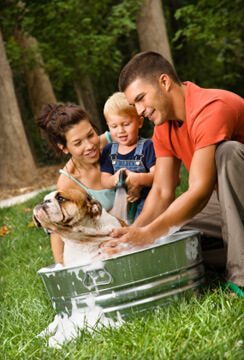
Family Washing Dog Using
Lifes Abundance Grooming Products
No one likes a bad hair day … and that includes your dog. Just like with humans, the skin is the largest organ of a dog’s body. Every day, their skin and coats are exposed to UV rays, pollution, infectious agents, drying heat or wind.

Because it can contribute to a dog’s overall health, grooming should be an essential part of companion animal care. However, despite your best intentions, it’s not unusual for grooming habits to hit a glitch. Or two. Or three! While bathing a dog, I think all of us have experienced getting wetter than your dog, being interrupted by phone calls, or, worst of all, a sudsy canine tearing off, leaving a wet, sudsy trail behind him. As a veterinarian with a good deal of grooming experience, I can tell you that planning ahead can reduce unwanted problems and stress, so here are a handful of my best tips.


BEFORE THE GROOMING SESSION

Unfortunately, bathing can be stressful for some dogs, as some just tolerate it better than others. For those pups who are particularly skiddish, consider brewing some chamomile tea to calm your dog. Thirty minutes before you bathe, give your dog a cooled cup of chamomile tea with honey, followed by a dog treat that’s rich in carbohydrates, like our Antioxidant Health Bars. The carbohydrates will help deliver the calming tea straight to your dog’s brain. Better yet, you can both sit down with some tea and play soothing music, to set a calming tone for your upcoming grooming session. You can also give your dog tea during the grooming session. As we’ve already mentioned, just make sure the tea has cooled off (no hotter than room temperature). 

I recommend the use of a grooming apron with pockets that covers you from chest to mid-thighs, to protect your clothes. While you can always put your clothes in the laundry later, dog hair can be difficult to remove from a washing machine. A full apron not only protects your clothes, in the pockets you can keep treats, shampoo, conditioner and a brush. The treats you choose must smell appealing to your dog - like our Tasty Rewards Training Treats - and keeping them in your apron pockets will leave your hands free for grooming.

If your dog is of a long-haired breed, brush with a fine-tooth comb prior to bathing, so you don’t have to contend with knots while shampooing, potentially making a bad problem worse.

DURING THE GROOMING SESSION

Whether you bathe your dog in the tub or the backyard, sit on a low stool to prevent stress or injury to your back and knees. If you’re outside, I advise that you use a six-foot leash. Tie it around your waist or hook it on your belt to free up your hands and prevent your dog from slipping away for a sudsy romp.

If you’re using water from an outdoor hose, keep in mind that, while it might be warm outside, the water will feel cold to your dog, not always without substantial discomfort. If at all possible, use tepid water, either by running extension hoses from the sink in your house, or simply bathe your dog indoors in a tub.

When you apply the shampoo, make small circles with a hairbrush with plastic nubs to distribute the shampoo evenly through the hair and onto the skin. This will also exfoliate the skin and allow the herbs in the shampoo to penetrate the skin. Leave the shampoo on for about three minutes, but don’t allow it to dry as this can irritate the skin. Our Revitalizing Shampoo suds well, rinses easily, and features rosemary to help increase blood flow, ultimately contributing to healthier skin and hair.

Most animals really don’t enjoy having their heads washed, so I suggest that you simply wet the head using a wash cloth. That way, you’ll be sure to prevent shampoo from entering the eyes or ears, making the entire experience more enjoyable for your canine companion.

AFTER THE GROOMING SESSION

I recommend towel drying your dog versus using a blowdryer, which can excessively dry or even burn skin, and frighten some dogs with the sound generated by this device. The best method for towel drying is by patting rather than using a circular motion, which can often lead to matting.

In most cases, you’ll be able to see an immediate change in your dog’s appearance following a bath. You’ll know that you’re using a high quality shampoo when your dog has a shinier, fuller coat, less dander and no more “doggie smell”. With moisture-activated odor neutralizers, our Revitalizing Shampoo features antioxidants and organic extracts of rosemary and sage, nutritive herbs that penetrate into the hair shaft and promote coat health. Also included are kiwi and mango essences, selected because they too enhance the health of the skin, as well as leaving your dog’s coat smelling clean and fresh.

You should not bathe your dog more often than every two-to-three weeks. If your dog’s coat could do with some freshening in between baths, use Bath Fresh Mist to neutralize odors and condition the skin and coat. This product is so simple to use … just spray and brush into in the coat. You will love the aroma and your dog will love the attention!

And what about you? Do you have any “must-know” grooming tips that you’d like to share with your fellow blog readers? Be sure to leave your thoughts in the comments section below.

Thank you for all you do to make the world a better place for companion animals!

Dr Jane Bicks   Dr. Jane Bicks

###

Today's post suggested by Lifes Abundance Dog Food

***
  • Digg
  • Del.icio.us
  • StumbleUpon
  • Reddit
  • RSS

Sunday, July 17, 2011

Keep Your Dog Healthy in Summer

0 comments
Keep Pets Happy, Healthy in Summer

(Adapted from Saturday, July 16, 2011 Issue of the Daily Inter Lake, Kalispell, MT)
Most people view their pets as an extension of the family.  Therefore, pet parents are interested in the best ways to ensure their dogs, cats, birds or small mammals are healthy and happy.

It doesn’t take much to keep a pet healthy, but these steps are essential for the well-being of the animal.  An individual who is not able to provide the general care for a pet – whether financially or emotionally – should reconsider bringing a pet into the household.

1.     Choose healthy foods.  Many commercially prepared foods are full of fillers and sugars instead of fresh meats and grains.  Although it may cost a bit more, pet food that is primarily good quality meat and grains with minimal preservatives or artificial colorings can keep a pet in better form. Diet can affect health in a number of ways, including energy levels and coat appearance.

2.      Keep fresh water handy.  All animals should be given fresh water that is routinely changes.  Bacteria and viruses can multiply in water that is left sitting around.  Plus, there may be other contaminants in unfiltered water that’s left stagnant.

3.      Exercise your pet.  All animals need exercise to be healthy.  Exercise helps to keep weight in check, banish boredom and ensure that the systems of the body all get pushed to their potential.  A dog that does not get to exercise may become destructive.

4.      Consult with a veterinarian.  Routing health checkups should be part of keeping a pet health.  Not only does the vet give annual vaccinations that can prevent common diseases, but also the vet will examine the animal to diagnose or catch illnesses early if a pet is not acting normal, consult the vet.

5.      Groom the pet regularly.  Some animals groom themselves.  Others can use the help of nail clipping, bathing and fur cutting to keep in top form.  Matted fur can pull at the skin and cause irritation.  Dogs and cats may lick or bite at a wound and cause more trouble.  Long nails can impede a bird’s ability to hold food or a perch.  In general, a clean pet is a happy pet.

6.      Know pet dangers around the house. Pet proof the home just as one would baby-proof it.  Keep chemical products locked up so they cannot be consumed.  Certain products smell sweet and inviting to unsuspecting pets, but consumption can be deadly.  Even certain house plants can be toxic if eaten.

7.      Avoid “people” food.  Certain fruits and vegetables can be supplemented in pet’s diet (consult with a veterinarian). However, on the whole, limit the amount of human food that pets eat.  It may not provide the nutritional value of the animal needs and can contribute to obesity.  Foods like raisins, grapes, onions, and macadamia nuts can be toxic to dogs and cats, and should be avoided.

8.      Show interest in the pet.  A pet needs a certain level of interaction to be content. Discipline, affection and exercise with a pet parent are key components of animal health.
###
For a quality, holistic dog food that does not contain added chemical preservatives, artificial colors or flavors, choose Life's Abundance Dog Food.
  • Digg
  • Del.icio.us
  • StumbleUpon
  • Reddit
  • RSS
 
Copyright Dog Food Store 2013;